
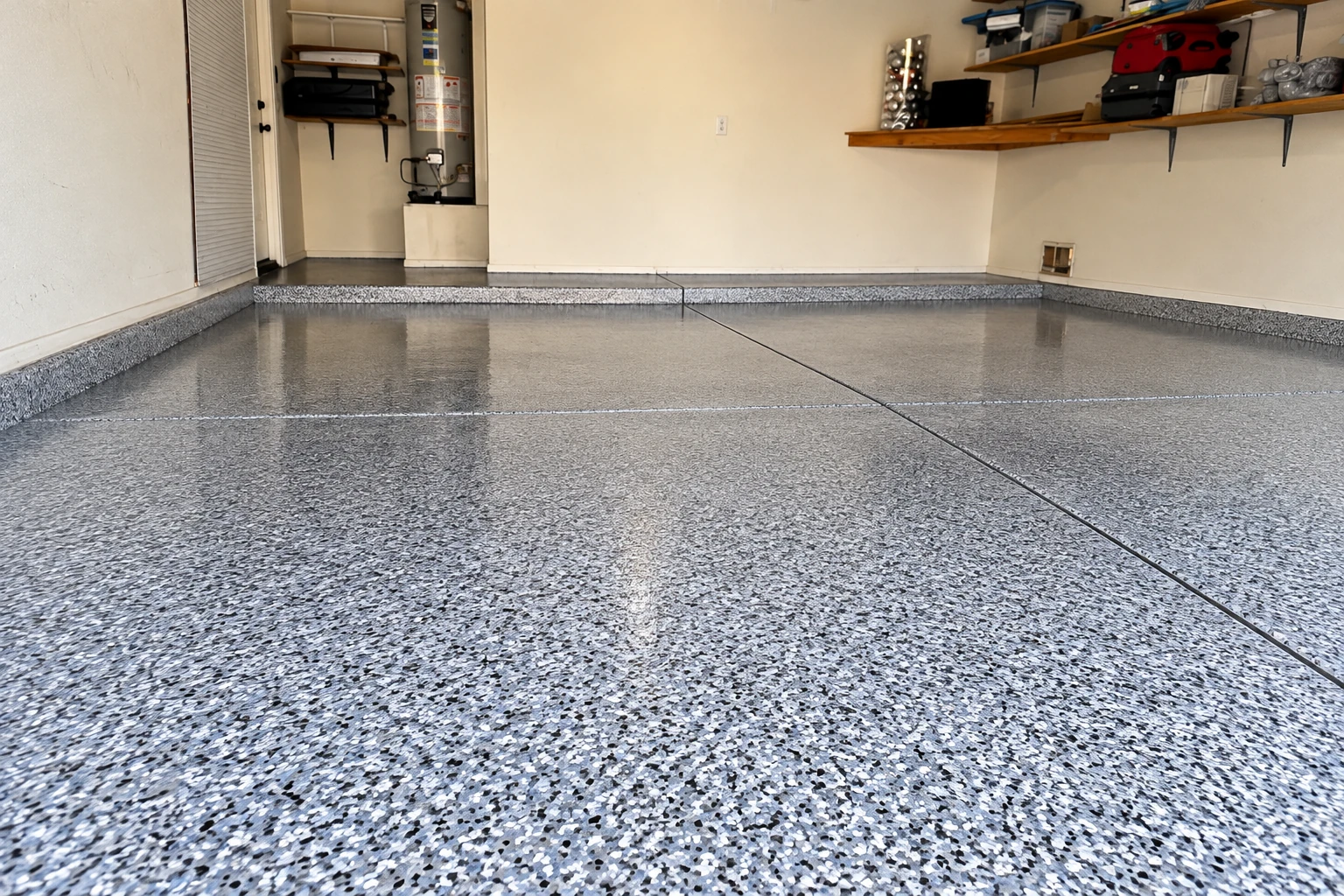
Lancaster's a short drive from our base in Cedar Hill, and the calls we get there sound a lot like the ones at home. Most are garages, where somebody's tired of oil stains, a dusty slab or a store-bought coating that's peeling up right where the tires sit. We also hear from shop owners. With new restaurants and shops filling in around the Historic Town Square, some of those calls are for kitchen and storefront floors that have to take a beating every day. We do the same work in DeSoto and Waxahachie.
What decides how a floor turns out here is the slab under it. A lot of the garages we walk into have had a few owners, and each one may have left paint, sealer or a patch behind, so we grind all of that down to clean concrete and fix the cracks before anything goes on. If a slab can't hold a coating, I'll tell you that up front.
What sets the price and the schedule
The price comes down to how big the floor is, what shape the concrete's in and which finish you pick. A clean, bare slab costs less to prep than one with old paint, soaked-in oil or cracks to fill. A polished or metallic floor takes more hands-on work than a flake coating, the speckled finish most garages get. The schedule turns on that same prep, on how long each coat has to cure before the next one goes on, and on when you need the space back. I come out, look at your slab and write the estimate myself, so the number fits your floor.
Garages, shops and kitchens need different floors
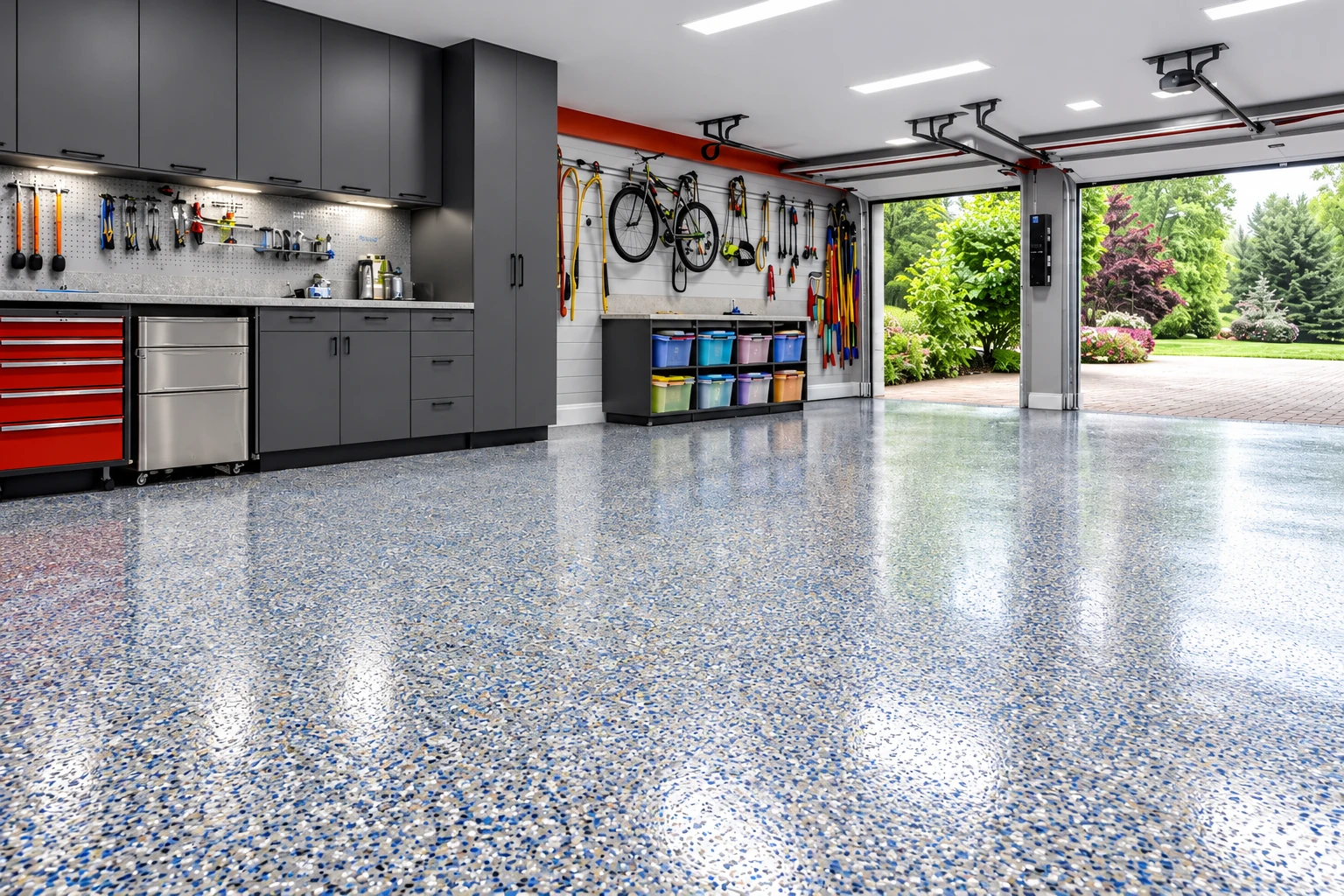
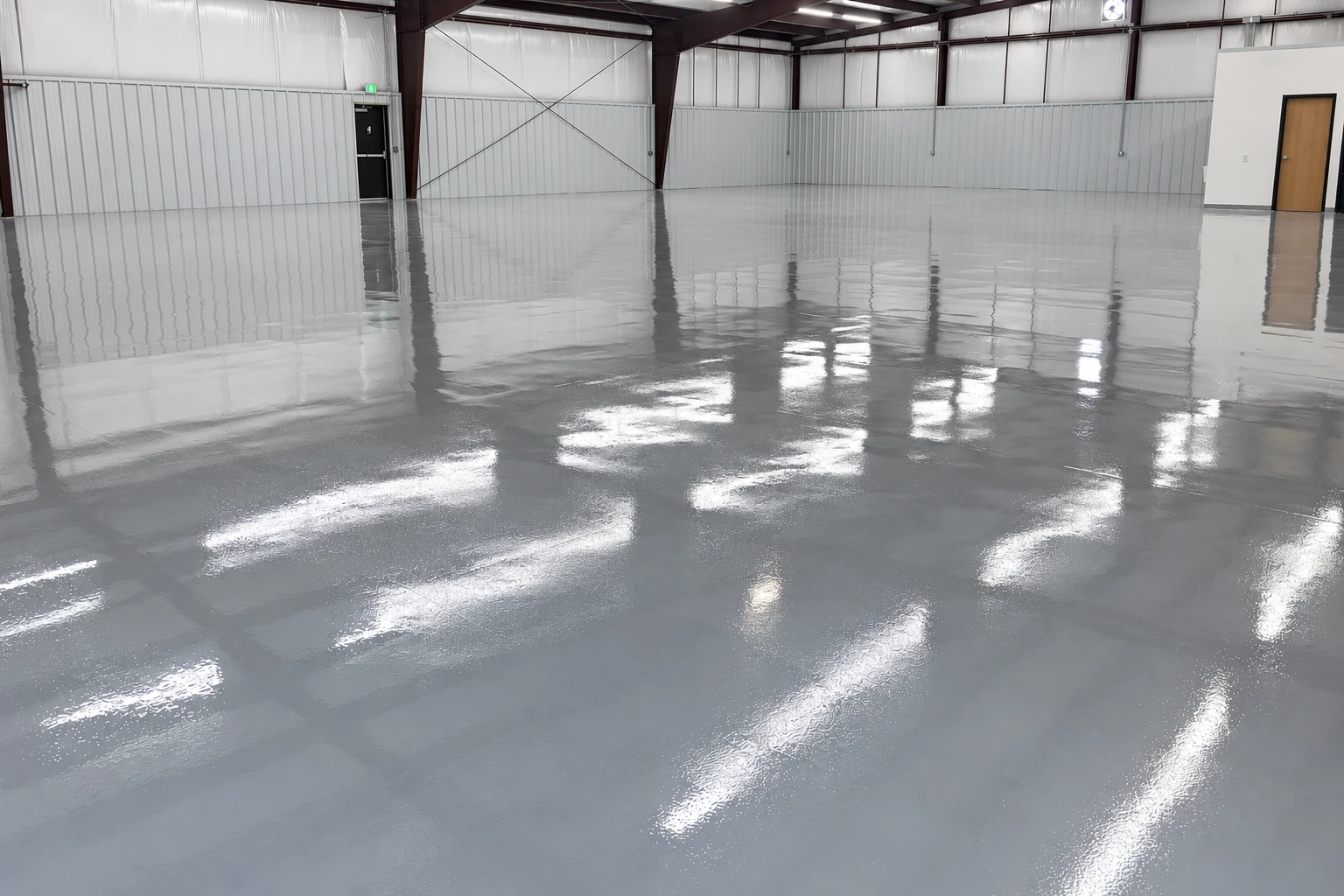
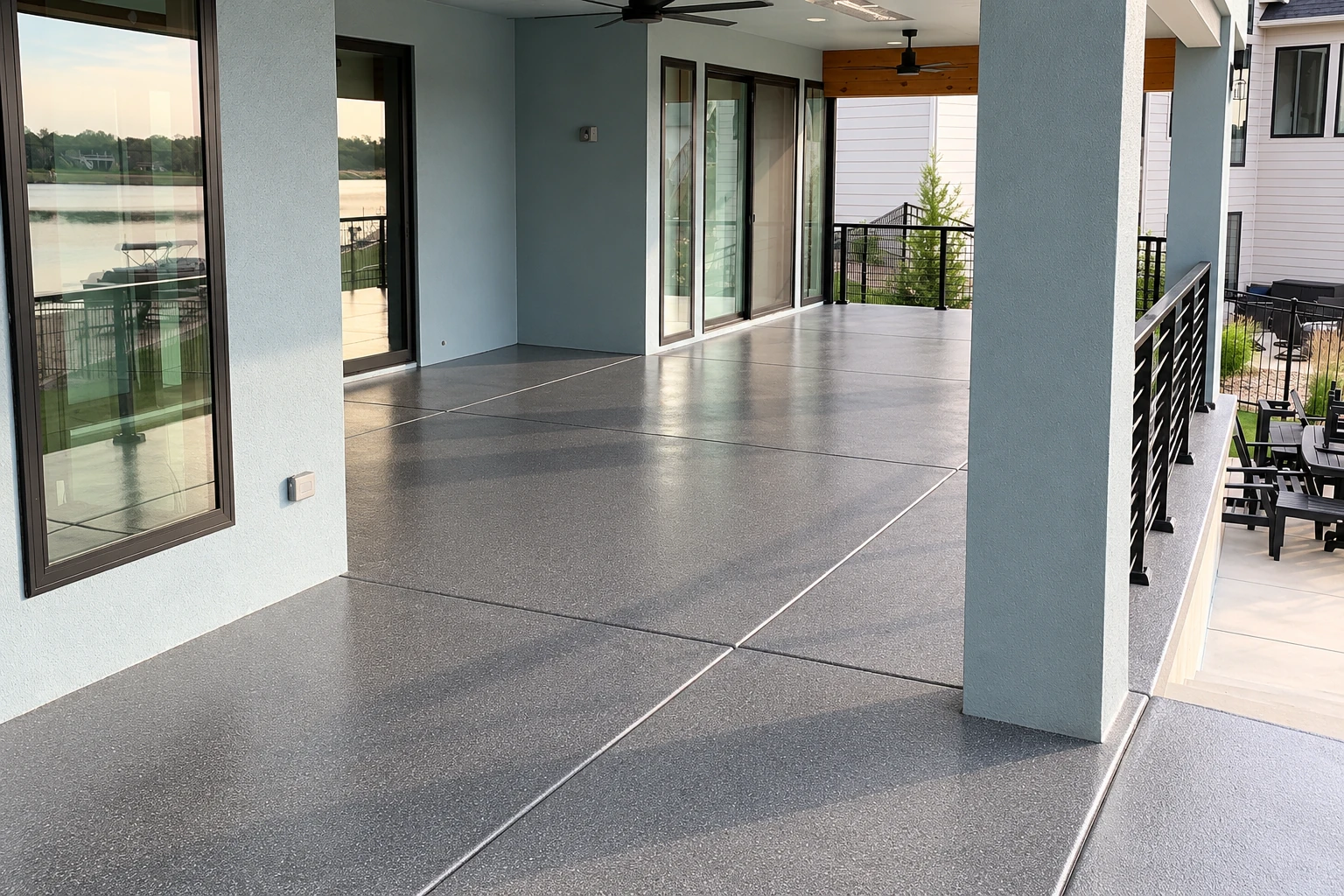
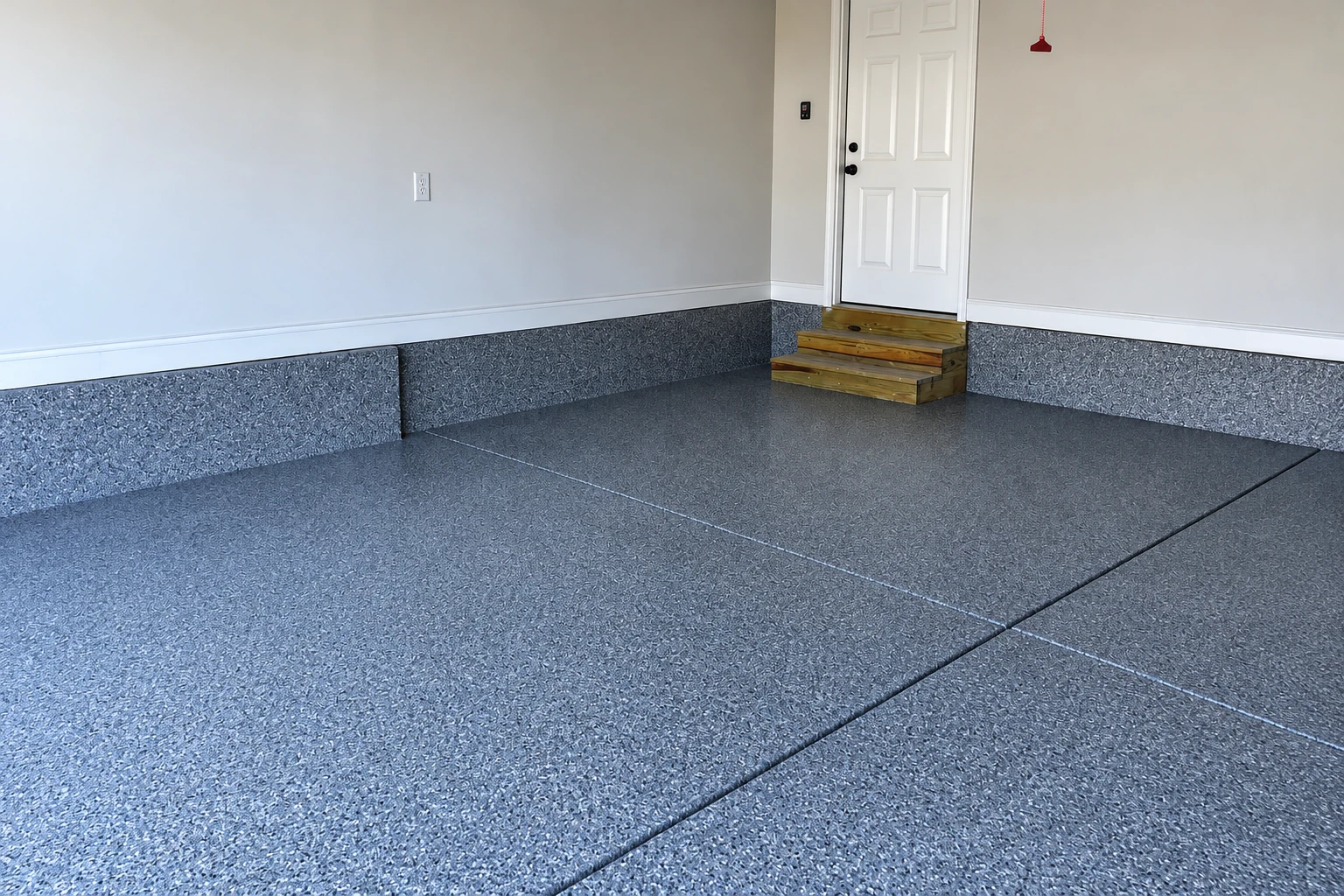
Most Lancaster garages do well with a garage floor coating that has flake in it, because it hides dust, gives your shoes some grip and handles dropped tools. A restaurant kitchen is a different story. Hot water, grease and daily scrubbing are hard on regular epoxy, so we usually steer kitchen owners to urethane cement, a cement-based coating made for that kind of abuse. A storefront that wants a clean, shiny look with nothing on top to wear through can be a good fit for polished concrete. If you've got a room below grade, moisture coming up through the slab decides what'll stick, so that's the first thing I check before we talk about basement flooring.
Getting your garage ready for us
Clear out what you can before we show up, because we grind and coat the whole floor at once and can't work around shelves and boxes. Cars, bikes and storage need somewhere else to live until the floor's ready to use again. If there's a water heater, a freezer or a workbench that's bolted down, point it out when I come for the estimate and we'll plan around it. Once we're done, stay off the floor until we tell you it's ready, because a coating that gets walked or driven on before it cures is the kind that peels up later.