
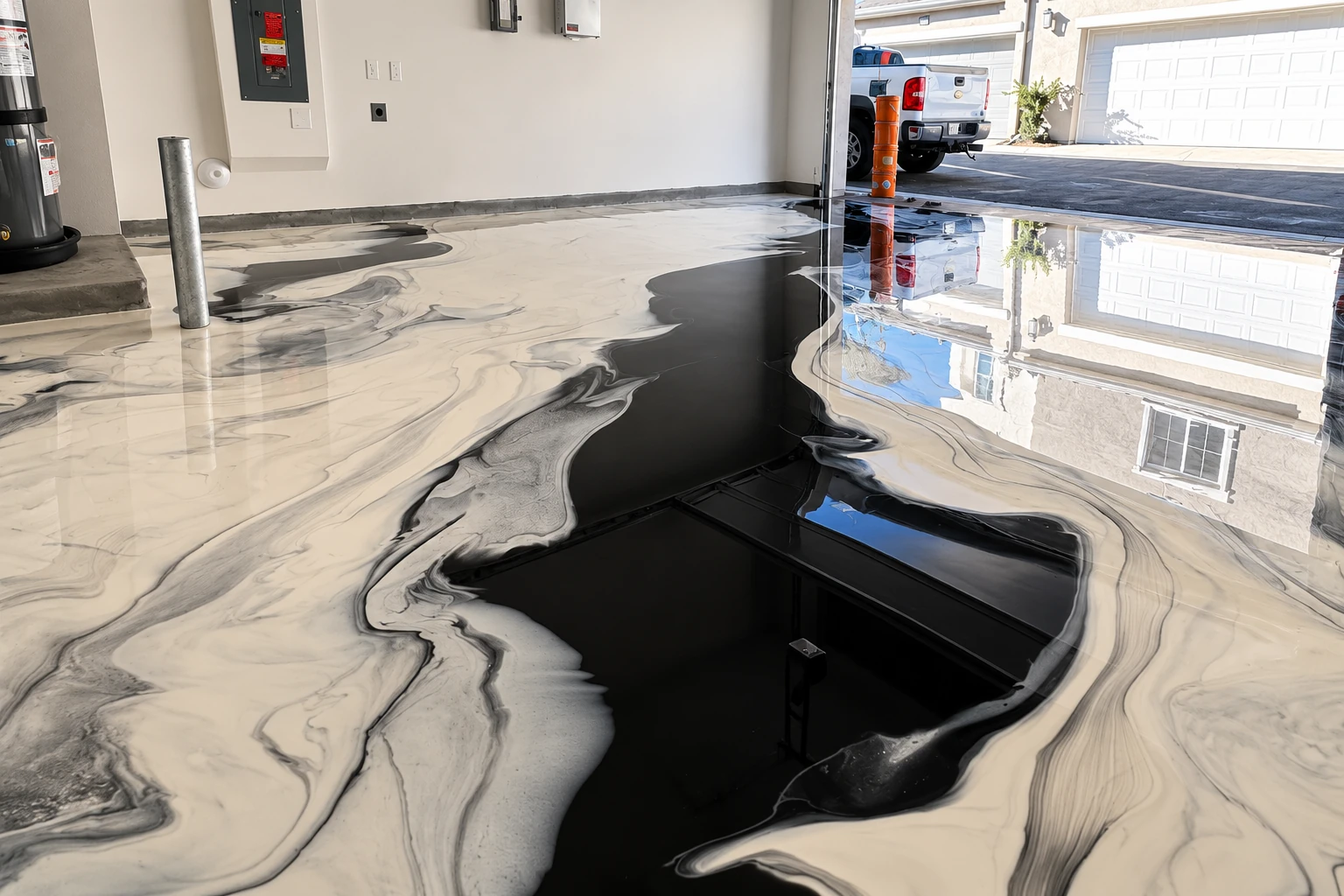
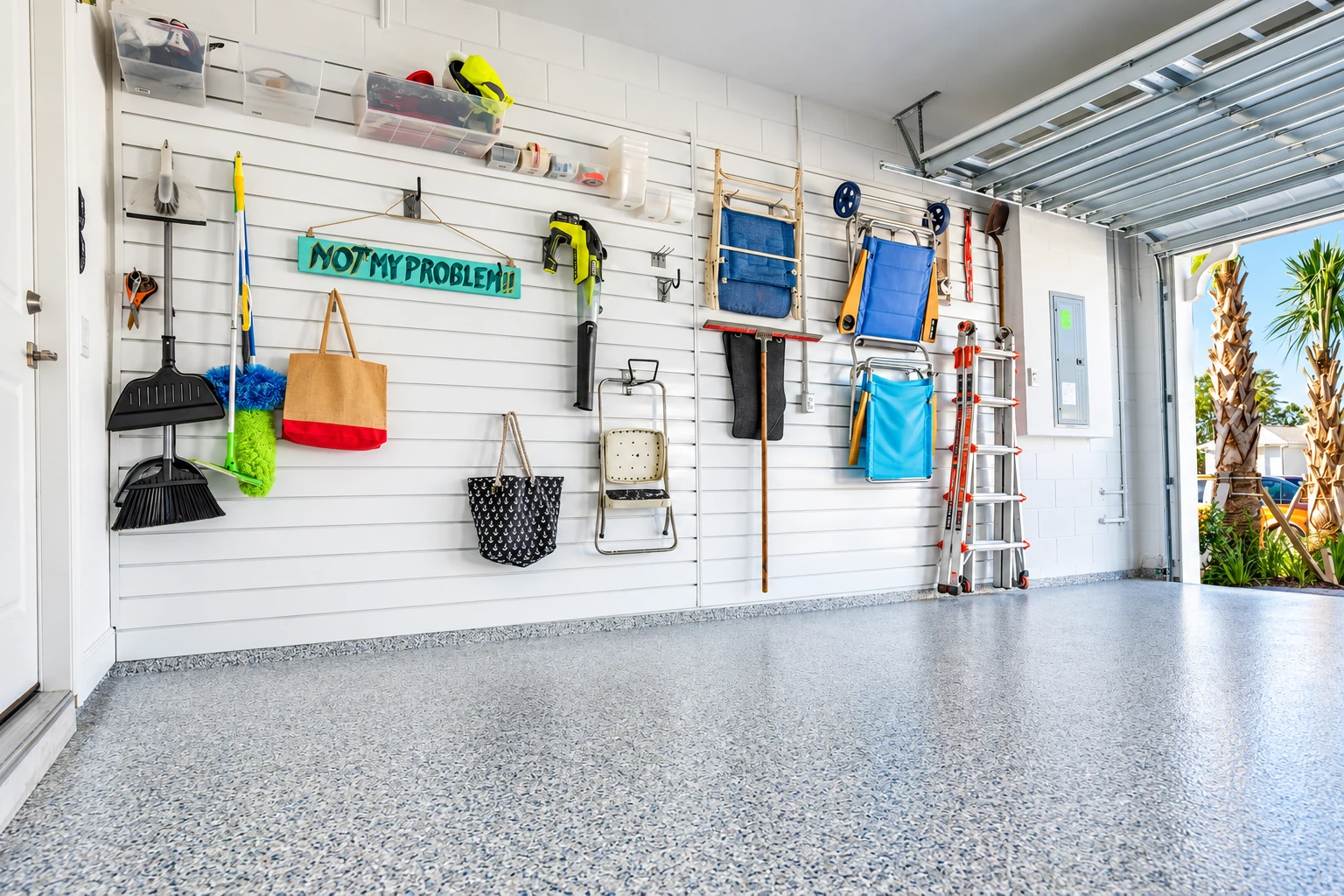
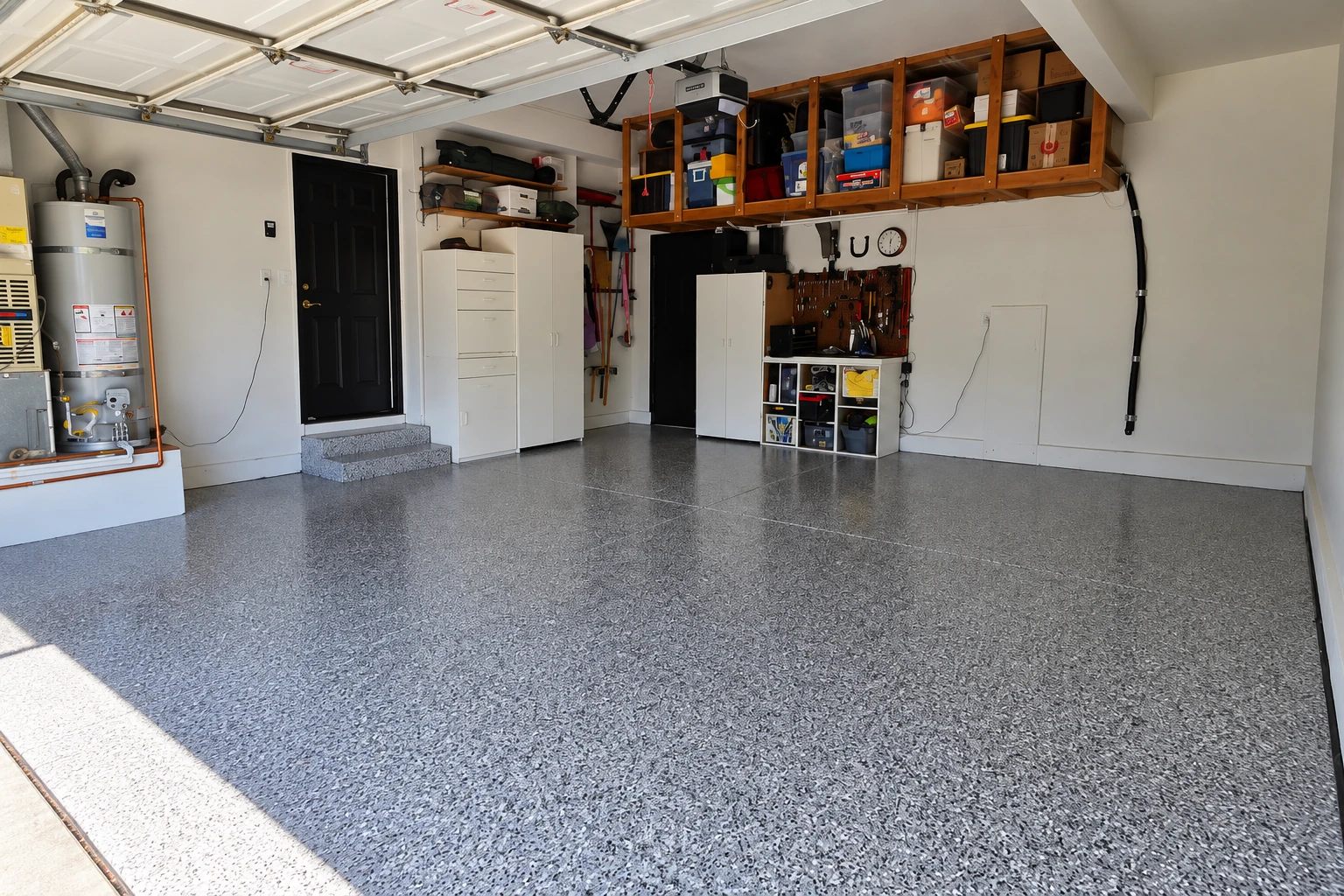
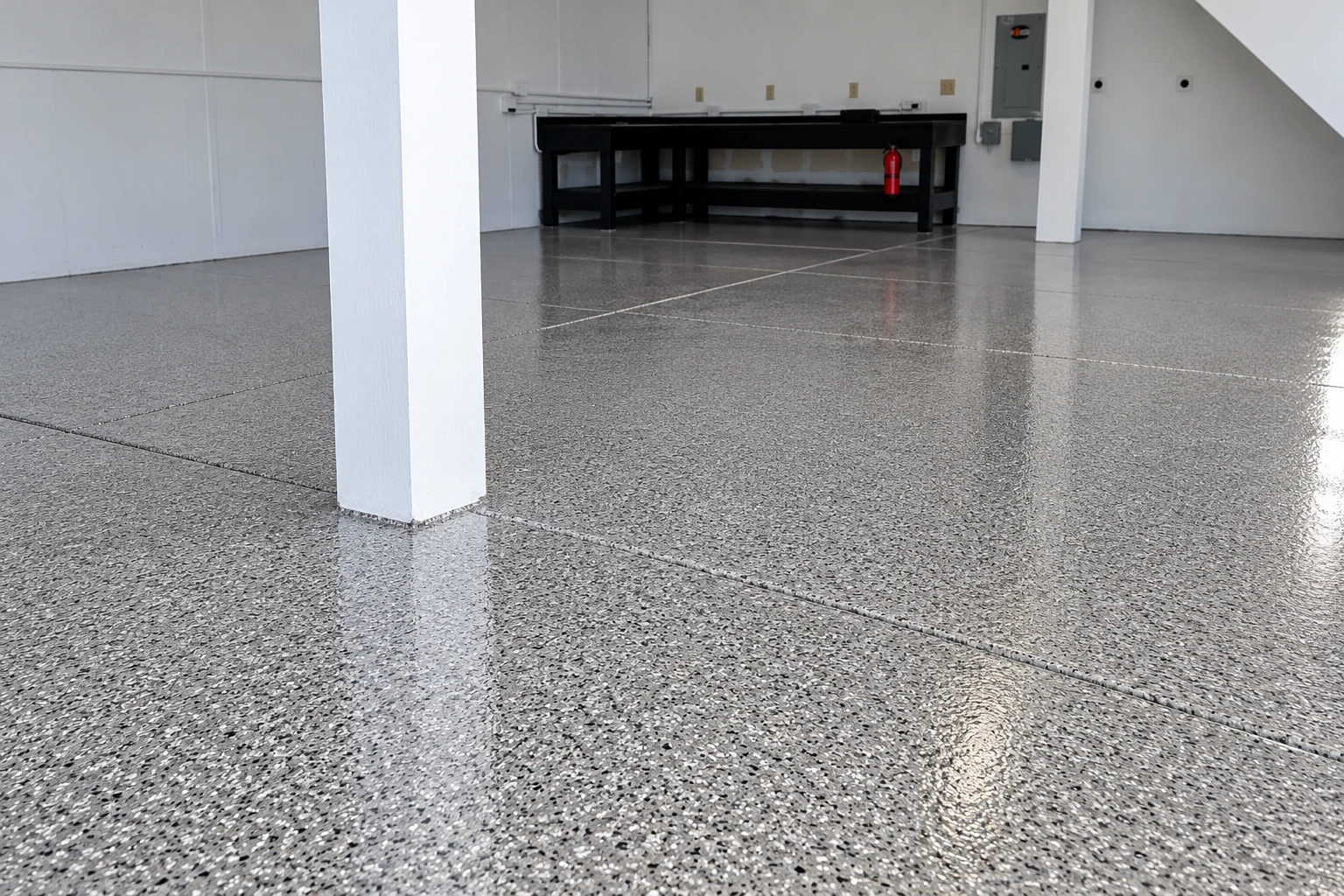
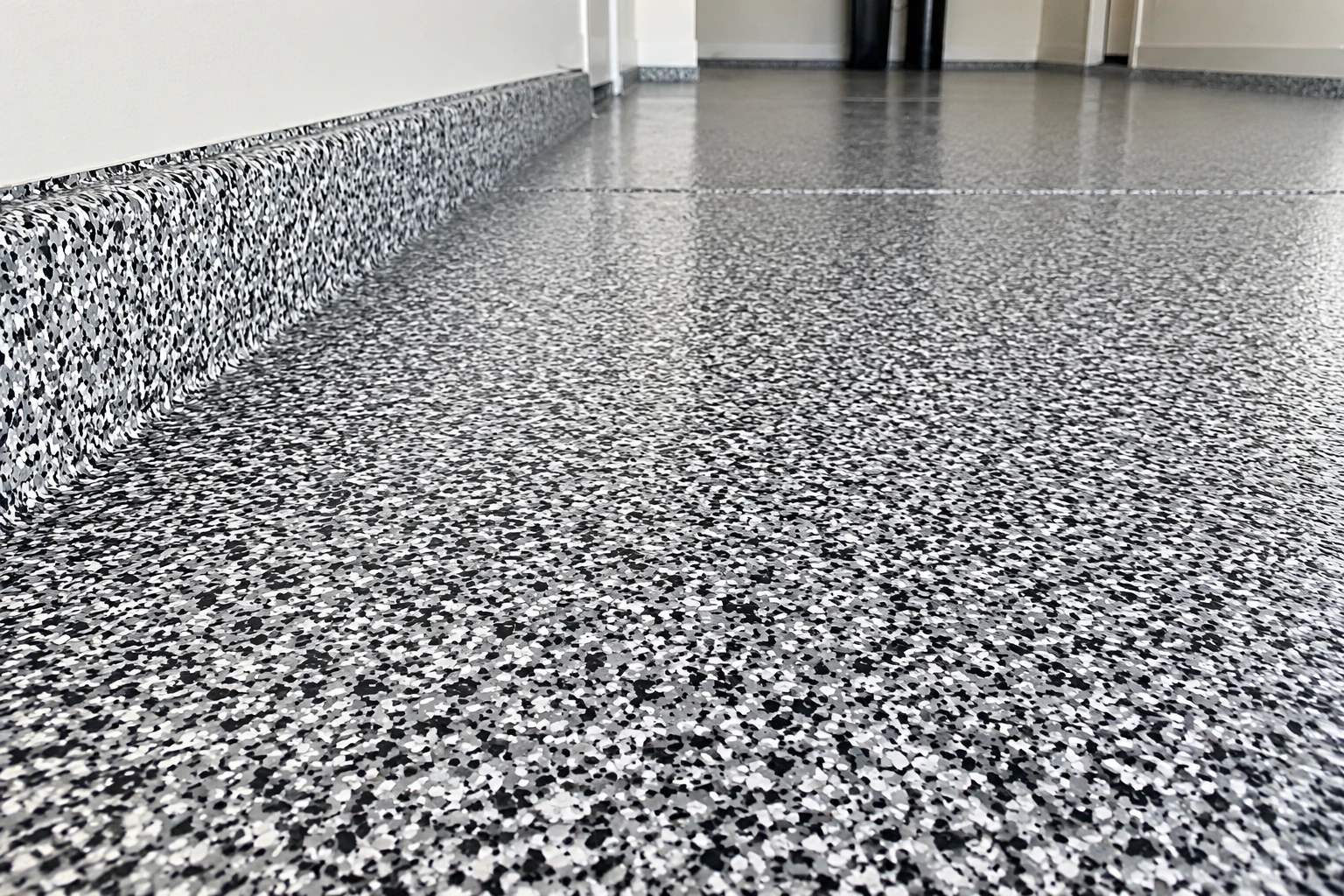
Cedar Hill is home, and most of our calls come from right here. Usually it's a two-car garage somebody's tired of seeing stained and peeling, but we also get shop, restaurant kitchen and warehouse owners who need a floor that can take a beating. We do the same work in the cities around it, like DeSoto and Duncanville, but the slabs here are the ones I see most.
The city sits at the northern edge of the Balcones Escarpment, so the ground rises and falls more than in a lot of North Texas, and plenty of homes sit on sloped lots with garages that pitch or step. A coating follows the slab it's on, so I look at how yours slopes and where it's cracked before we pick a system.
What moves the price and the timing
Price comes down to your slab as much as the coating. The size of the floor counts, but so do cracks, old paint or sealer that has to come off, oil stains, and the finish you pick, since a flake epoxy floor coating and a metallic or polished floor take different work. Timing turns on the same things, plus how long the coating needs to cure before you walk or drive on it, and whether the city wants a permit for your job. I come out, look at your floor and write the estimate myself, so the number you get is for your slab and nobody else's.
Getting your garage ready for us
Clearing the floor is the biggest help you can give us, because our crew grinds the whole slab edge to edge and anything left on it is in the way. Move the cars out, pull boxes, shelves and tools off the floor, and tell us about anything that's bolted down so we can plan around it. We'll need power and room near the door for our equipment. Once the last coat goes on, keep the space empty while it cures, and we'll tell you when it's ready for foot traffic and when it's ready for the car.
Why we fix the concrete before we coat it
A coating only holds as long as the concrete under it does, and most peeling floors I see were rolled onto a slab nobody prepped. So our own trained installers grind the surface open, fill cracks and chips, and get the oil out before anything goes down. If your slab has a problem we can't fix, like one that keeps moving or stays damp, I'll tell you it's not a fit and what it needs first. I'd rather do that than sell you a floor that lets go, and we've worked this way since 2013.