
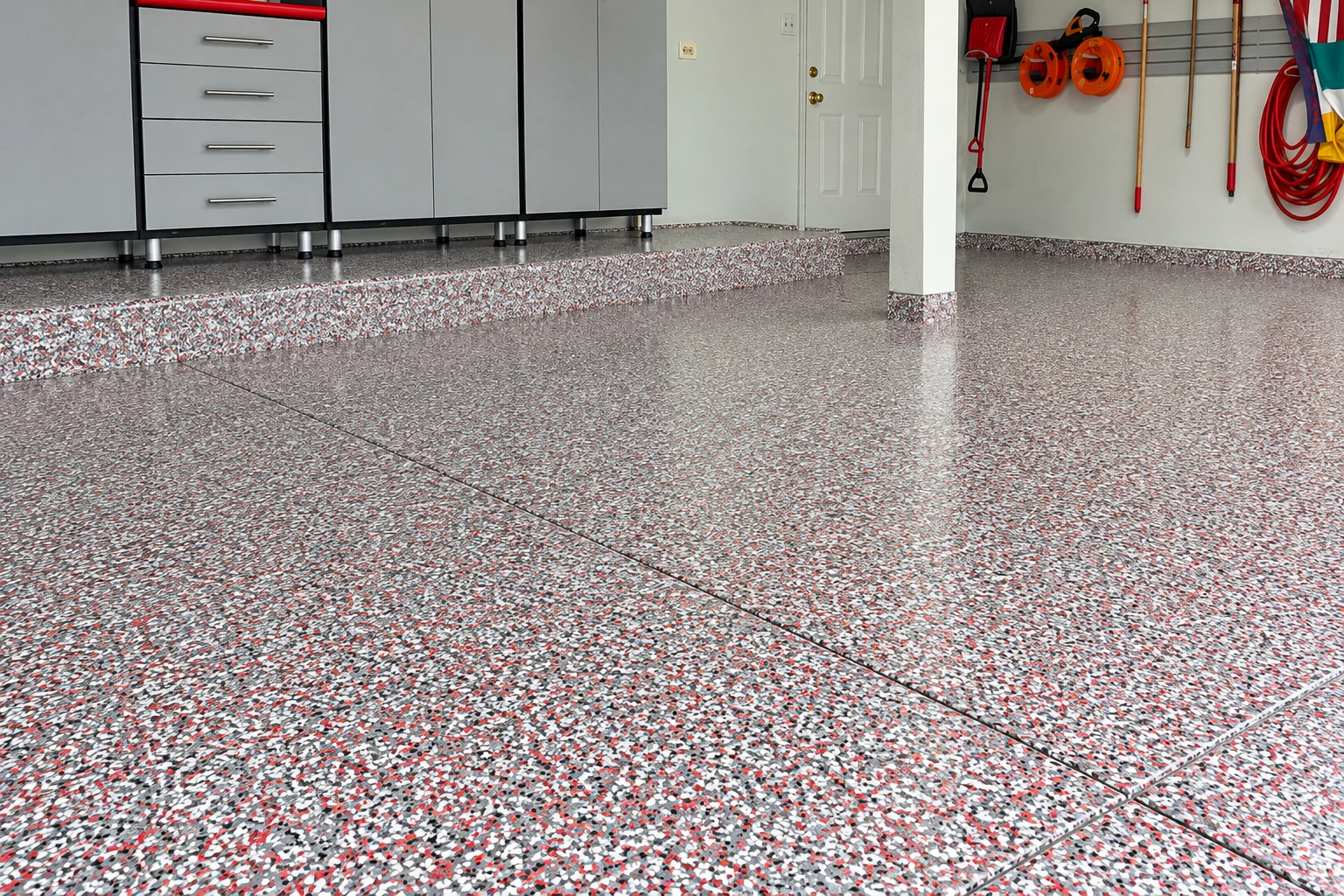
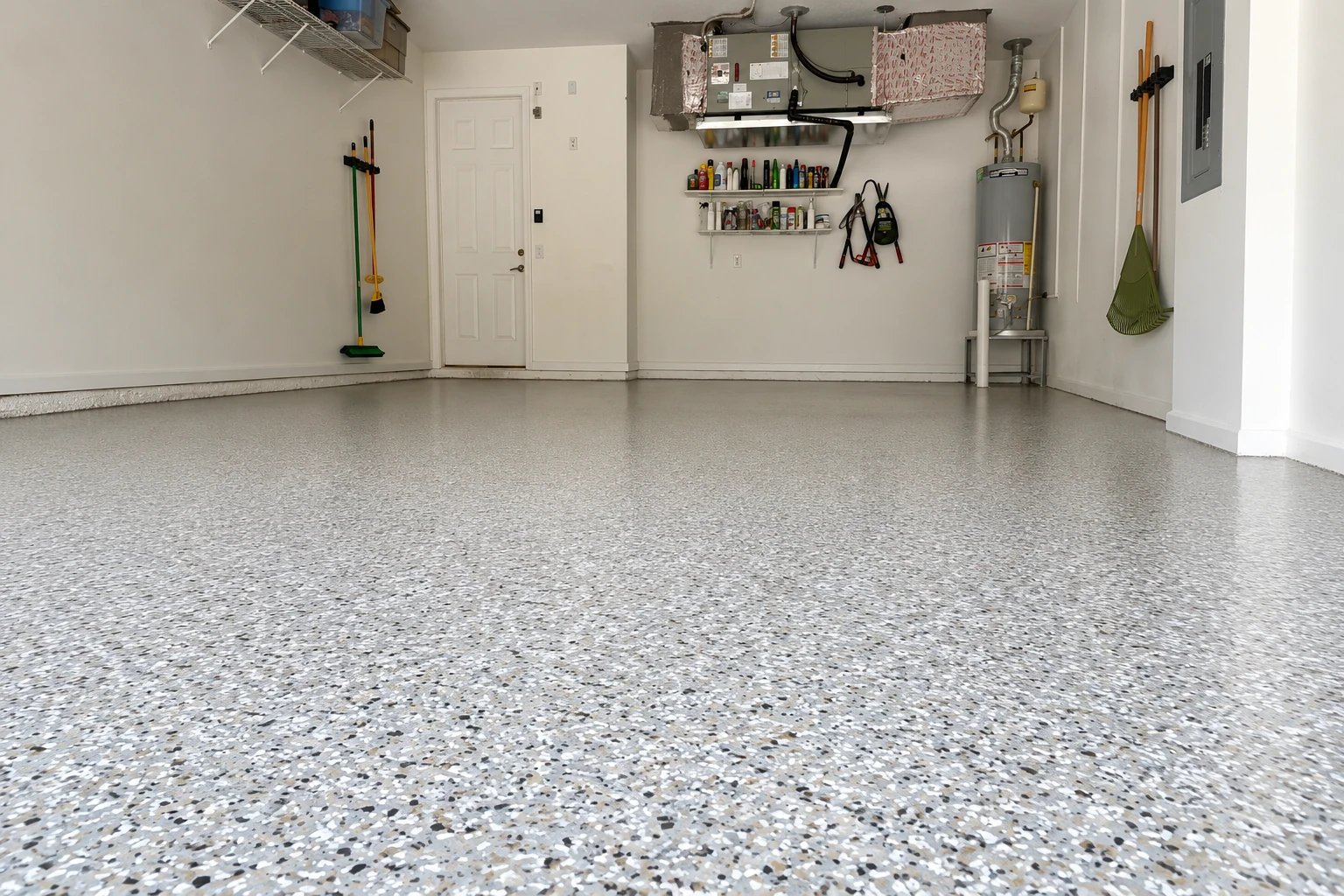
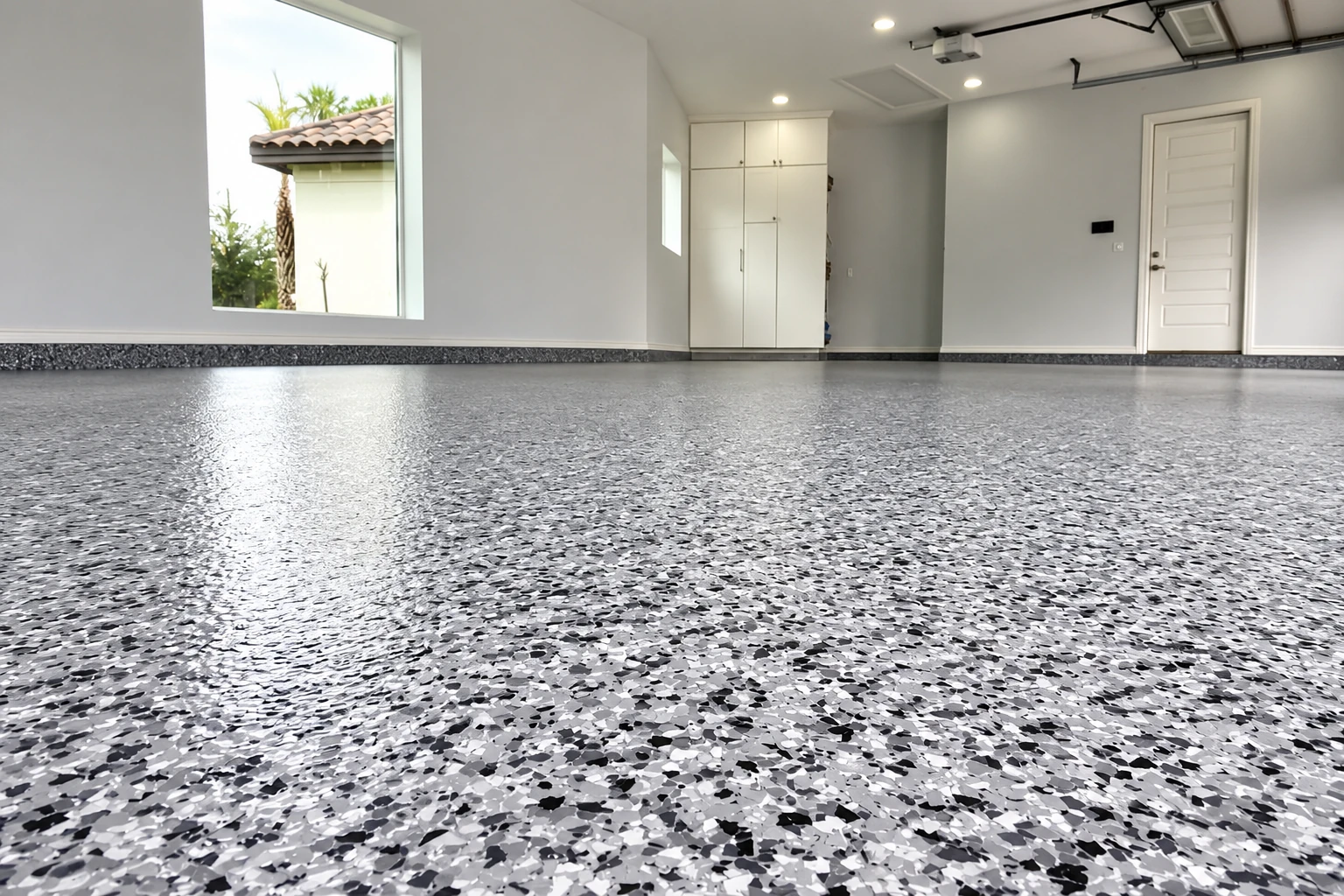
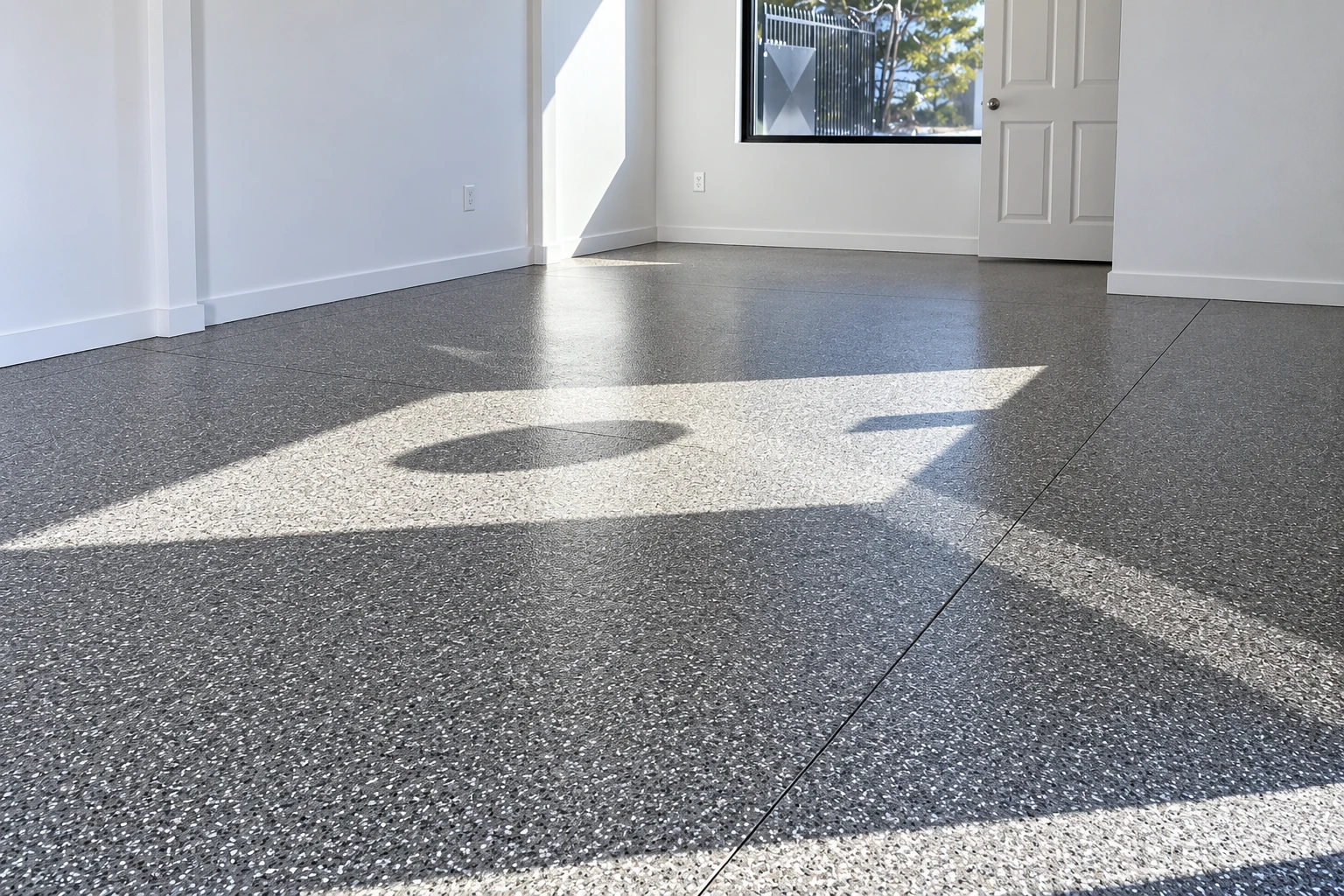
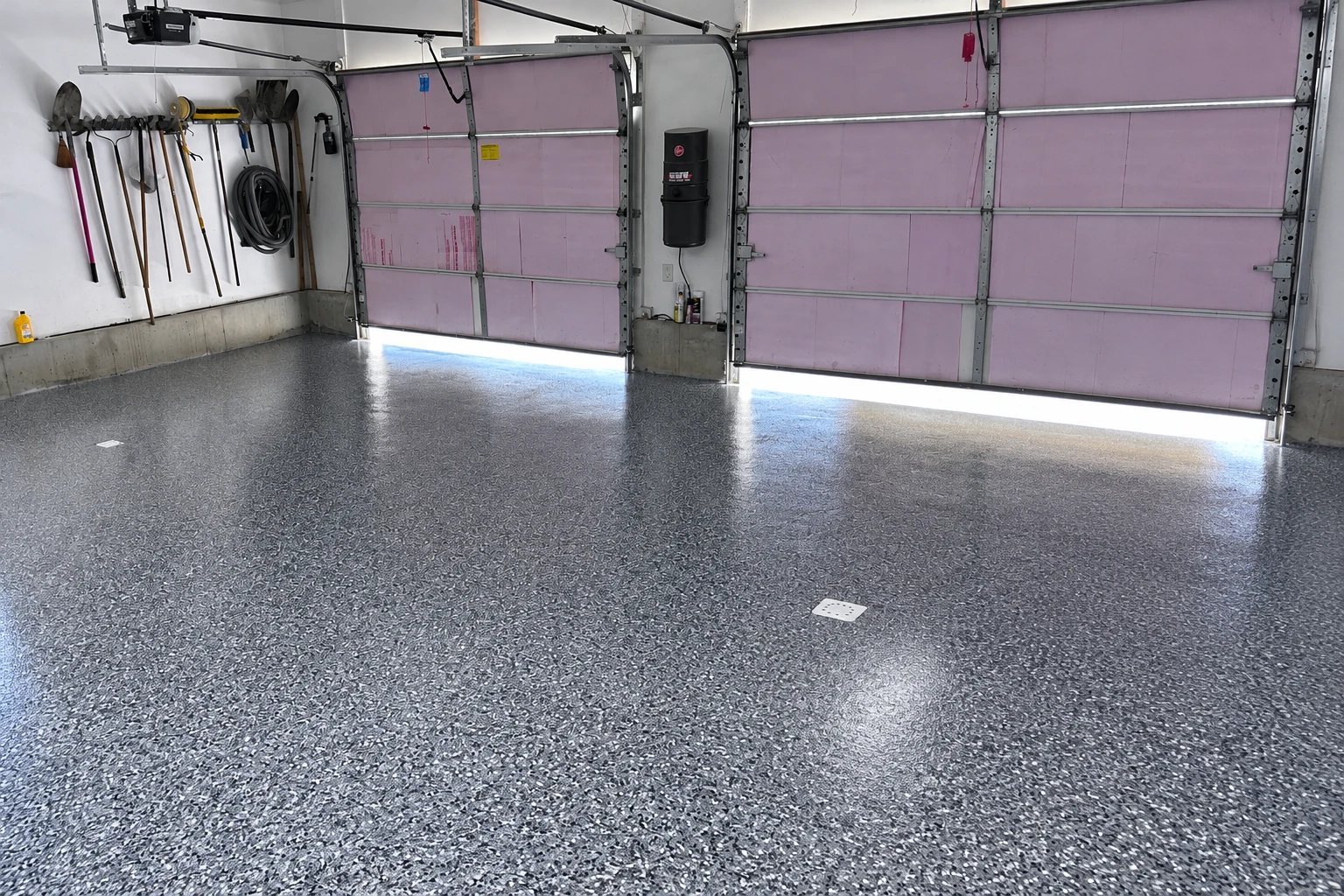
DeSoto is one of the cities around Cedar Hill where we work, and the calls here sound a lot like the ones closer to home. Most come from homeowners who are done with a garage floor that's stained, dusty or peeling from a store-bought kit, and some come from shop and business owners who need a floor that can take a beating. We do the same work in Duncanville and Grand Prairie, with the same installers and the same habit of fixing the concrete before anything goes on it.
What decides a DeSoto job? Usually the slab itself. A garage that's been parked on for years tends to hold oil, old sealer or a coating that's starting to lift, and all of that has to come off before anything new goes down, because a coating only holds as long as the concrete under it does.
What sets the price and the schedule
The size of the floor matters, but the condition of the concrete usually moves the price more. Cracks, pits, oil soaked deep into the slab or an old coating that has to be ground off all add prep time, and prep is where a floor either holds or lets go. Your choice of system counts too, since a plain epoxy coat, a flake floor and a metallic finish don't take the same materials or steps. The schedule turns on that prep, on any repairs I find, and on how long the coating needs to cure before you drive on it. I come out, look at the slab and write the estimate myself, so the number fits your floor.
Getting your garage ready for us
The biggest thing you can do is clear the floor, because we need the whole slab open to grind it and coat it. Cars, shelves, bikes and boxes all need somewhere else to live until the coating cures, so it helps to plan where they'll go before we start. Grinding is the loud, dusty part of the job, and our installers run dust collection on the grinders so it doesn't end up all over the house. Got a second fridge out there, or a workbench that's bolted down? Point it out at the estimate and we'll work out how to handle it.
Floors for DeSoto shops, kitchens and warehouses
Not every call is a garage. Shop, kitchen and warehouse owners call us when a floor takes forklifts, hot water, spills or steady foot traffic, and a thin coat meant for a two-car garage won't hold up to that. Those floors usually need heavier systems, and in a commercial kitchen, urethane cement is often the better pick because it handles heat and moisture well. Our page on commercial and industrial epoxy floor coatings walks through the options. Either way, it starts the same, with me looking at the concrete and telling you straight whether it's ready for a coating or needs work first.