
Basement flooring in Cedar Hill TX - a floor matched to how dry your slab stays
Damp spots, peeling paint or a musty smell on the basement slab? We test the concrete first, then put down a floor that holds.
I look at your slab myself
I come out to every job, check the slab and write the estimate myself, so the person pricing your basement is the one who's seen the concrete. Our own trained installers then handle the prep and the floor.
Prepping and coating concrete since 2013
We've been prepping and coating concrete since 2013, and in 13 years the floors that let go almost always had a problem underneath. That's why we'd rather fix the slab first, or tell you a floor isn't a fit.
Fully licensed and insured for your basement
We're fully licensed and insured, so the crew working in your basement is covered from the first pass of the grinder to the last coat. Call (972) 299-0201 or send our estimate form, and I'll come check your slab.
Basement flooring in Cedar Hill starts with the slab
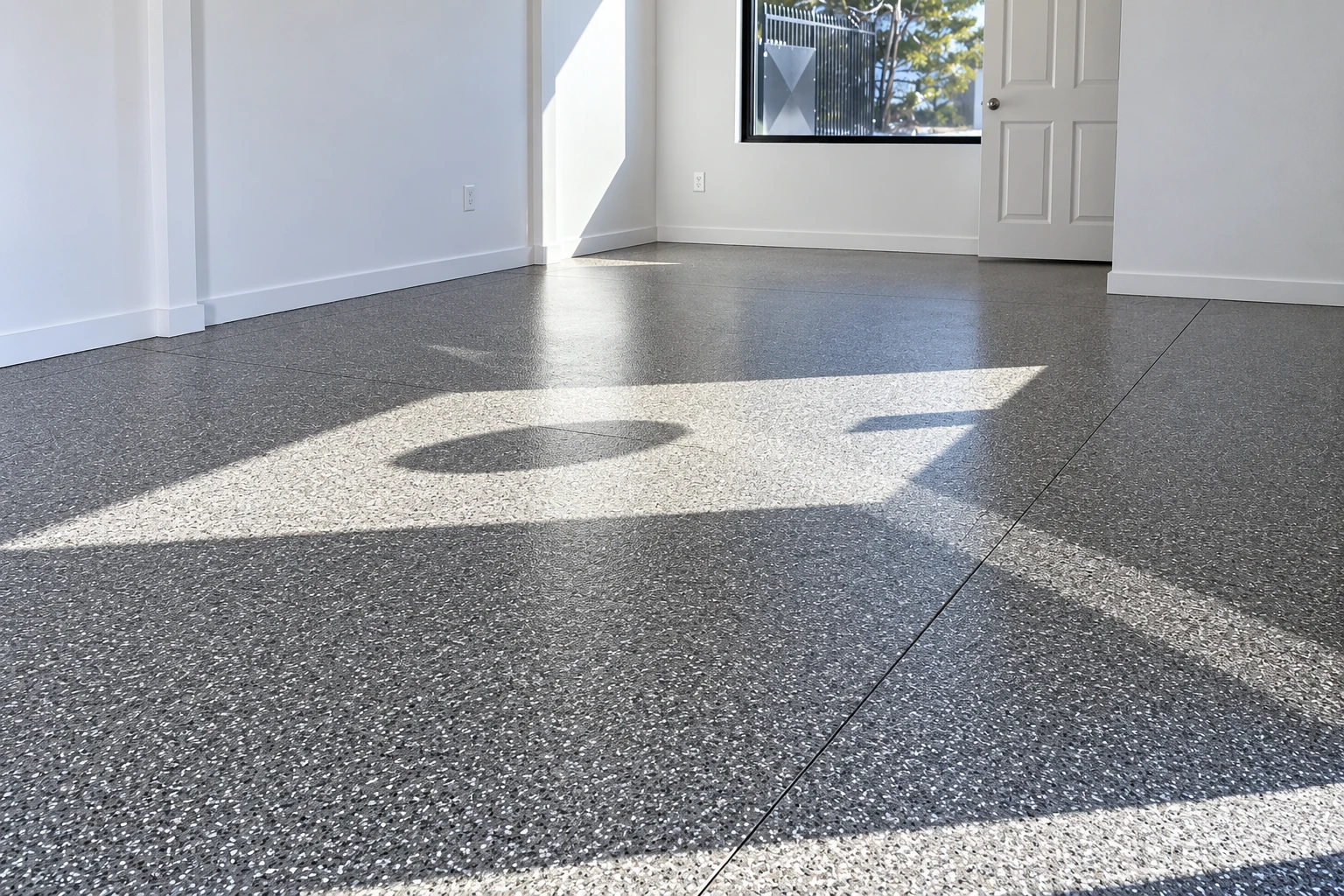
Basement flooring in Cedar Hill, TX means putting a protective coating or another floor over the concrete slab so the room works as storage or living space. It's for homeowners tired of a cold, dusty or damp-looking basement floor who want to use the room.
What's going on down there right now? Usually paint is flaking, there's a white crust or a dark patch on the concrete, or the room smells musty and you'd still like to use it. The first question isn't color, it's what the concrete is doing, because that decides which floor will hold. So I'll ask how you plan to use the room, whether it's ever taken water and what's on the floor now.
Price turns on the room's size, how much grinding and crack repair the slab needs, any old paint or glue to strip, and the floor you pick. The schedule turns on how dry the slab is and the cure time between coats. Your written estimate lays out the prep and every coat. Before we start, we check with the city's building office, and if the job needs a permit, we handle the paperwork.
Basement flooring, slab prep and sealing
Testing the slab before you choose
We check the slab for moisture before you pick anything, because a damp basement rules some floors out. If the concrete is still too wet, that moisture can collect under the new floor and show up as blisters, buckling, glue that lets go or mold. Most of Cedar Hill sits on clay soil folks call gumbo, a few inches to many feet deep, but that's the area, not your slab, so I measure instead of guessing. Then we help you pick a floor that suits how dry the room really stays.
Grinding and repairing the concrete first
Once the slab checks out, our crew gets it ready, since a floor only holds as well as the concrete under it. That usually means concrete grinding and surface preparation to open up the surface and take off old paint, sealer or glue, then filling cracks and pits so they don't show through the finish. Rushed prep is why so many coated floors peel, and it's the one part I won't shortcut to save a day. The finish then goes down coat by coat, with cure time in between.
Sealing and keeping the room dry
Not every basement needs a full coating. If the slab is sound and you mainly want less dust and a floor that's easy to sweep, concrete sealing can be the simpler fit, and we'll say so. Whatever floor you end up with, a basement used for storage or living space needs to stay dry to keep mold and dust mites away, so I'll point out anything I see letting water in, like a downspout emptying against the wall, before we settle on a plan.
Get your slab checked and a written basement floor estimate
We reply within one business day, then I come out, check your slab and write you a free estimate with no obligation. Tell us the room size, the current floor and any damp spots you've seen.
(972) 299-0201How your basement floor gets done
I come look at the slab
You call or send a message, and I come out to look at the floor, test the slab and hear what you want the room for. Mention anything you've noticed, like a musty smell or water after rain, since it all shapes the choice.
A written estimate, line by line
You get a written estimate that spells out the prep and every coat, so you see what you're paying for. If the slab needs drying time or repair first, it says so, and I'll tell you what to clear from the room.
Our installers, then a walkthrough
Our own trained installers do the grinding, repairs and every coat, so the work isn't handed off to another company. When the floor's done, I walk it with you before we pack up, so you can ask about anything before we leave.
Basement flooring questions in Cedar Hill
What has to happen before a basement floor goes down?
The slab's moisture has to drop to an acceptable level, and testing is how you know. One meter maker says a common in-slab test needs the slab and room air at the conditions you'll live with for at least 48 hours first, so we'll tell you when to have the room ready. Ask anyone you're considering how they check it.
Is carpet or vinyl a good fit for my basement?
Carpet fits only a basement that stays dry, since many carpets can be ruined quickly by moisture. Sheet vinyl has fewer seams for water than plank. But if your slab sits on rigid insulation with plastic sheeting against the concrete, one building science guide says it can only dry upward, so let it dry and skip vinyl.
Do I need a permit for basement flooring in Cedar Hill?
It might, so check with the City of Cedar Hill before work starts. The city requires a permit for any alteration or repair of a building, and its no-permit list names painting and cabinets, not flooring. Contractors on permitted work must be registered with the city, and electrical, plumbing or mechanical work needs a State of Texas licensed contractor.
How much does basement flooring cost in Cedar Hill?
Flooring installation in Dallas usually costs about $10 to $13 per square foot before tax. That's the going rate in the area, not our price, and the prep your slab needs is usually what moves a basement's number most. Your written estimate gives you your own figure.