
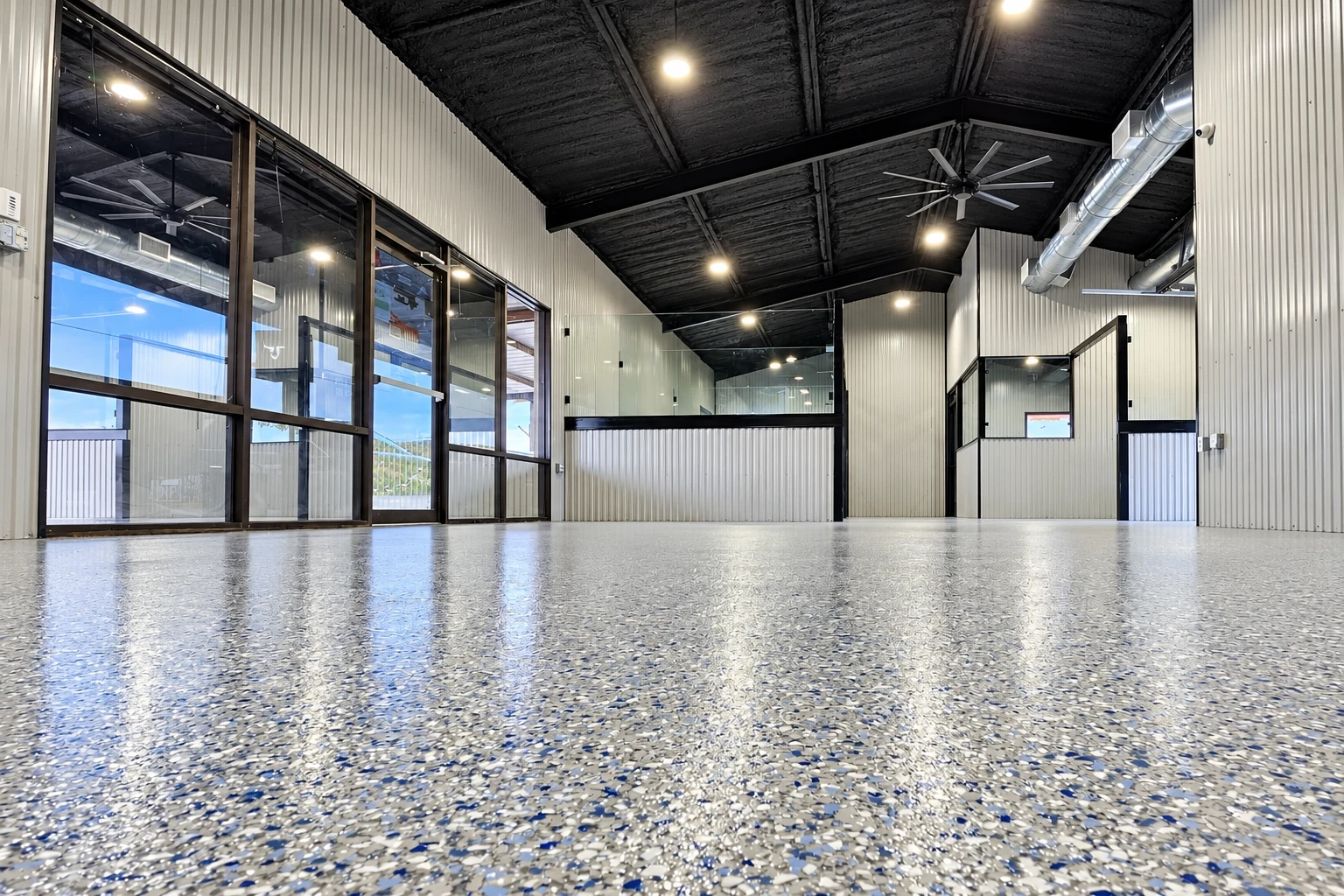
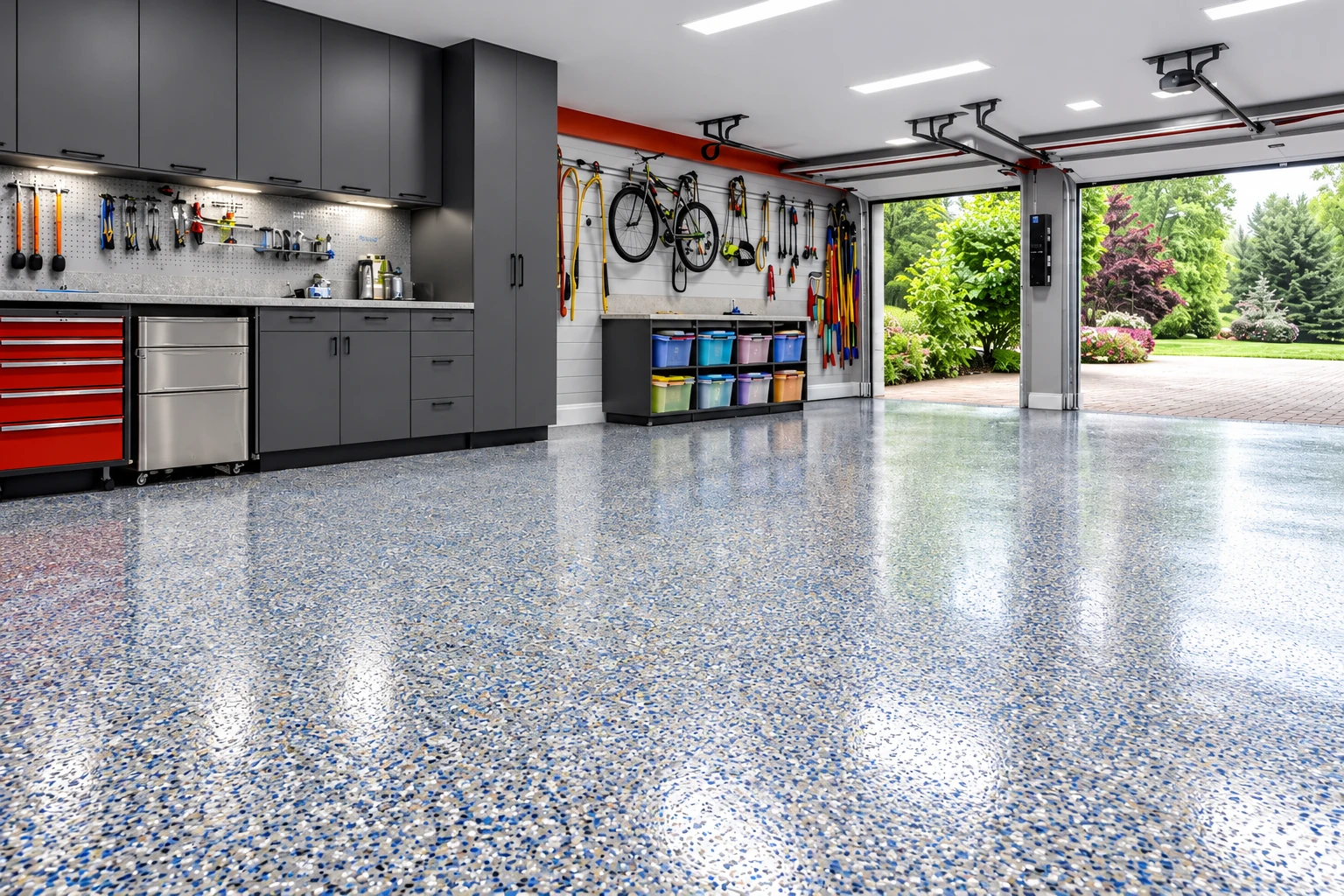
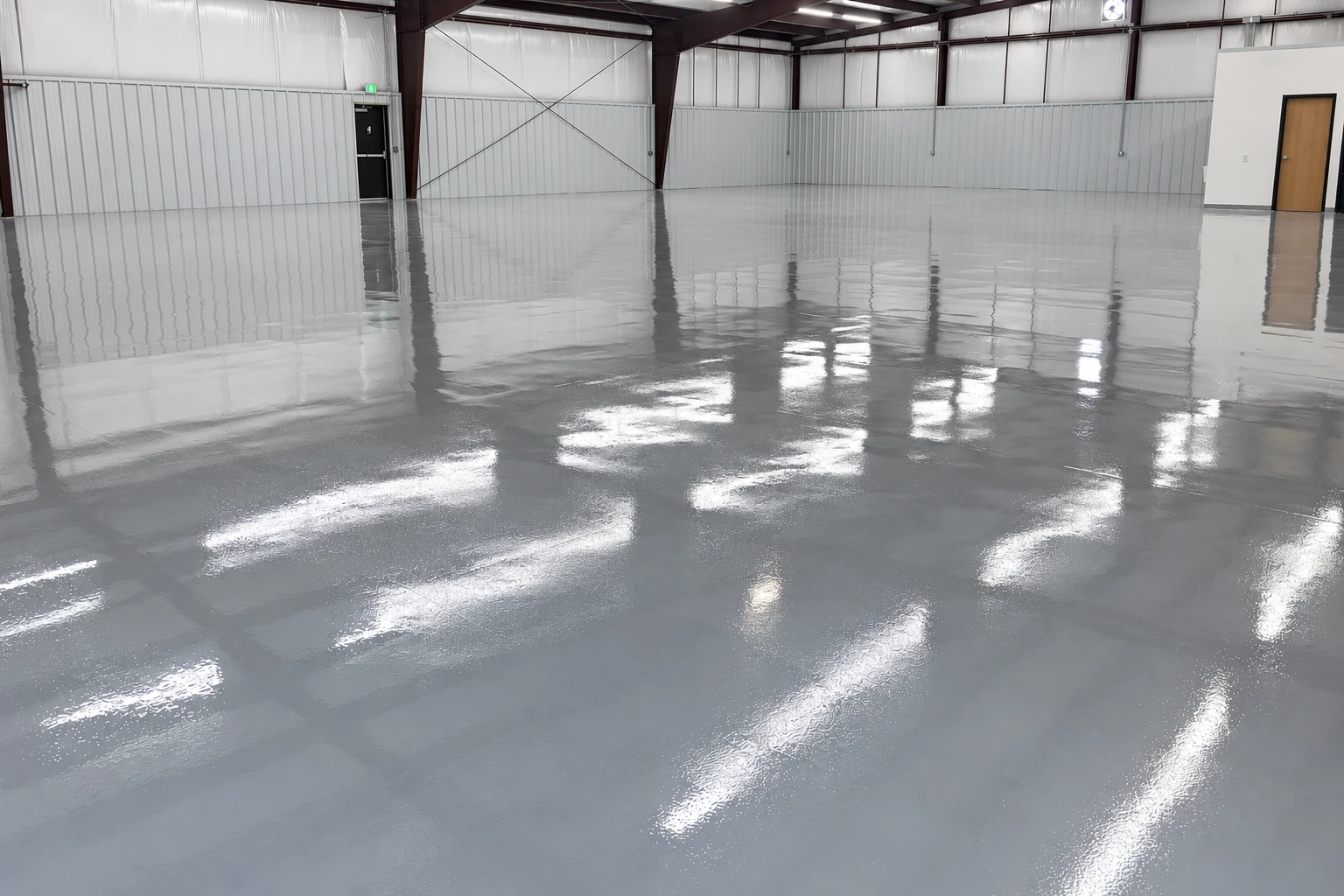
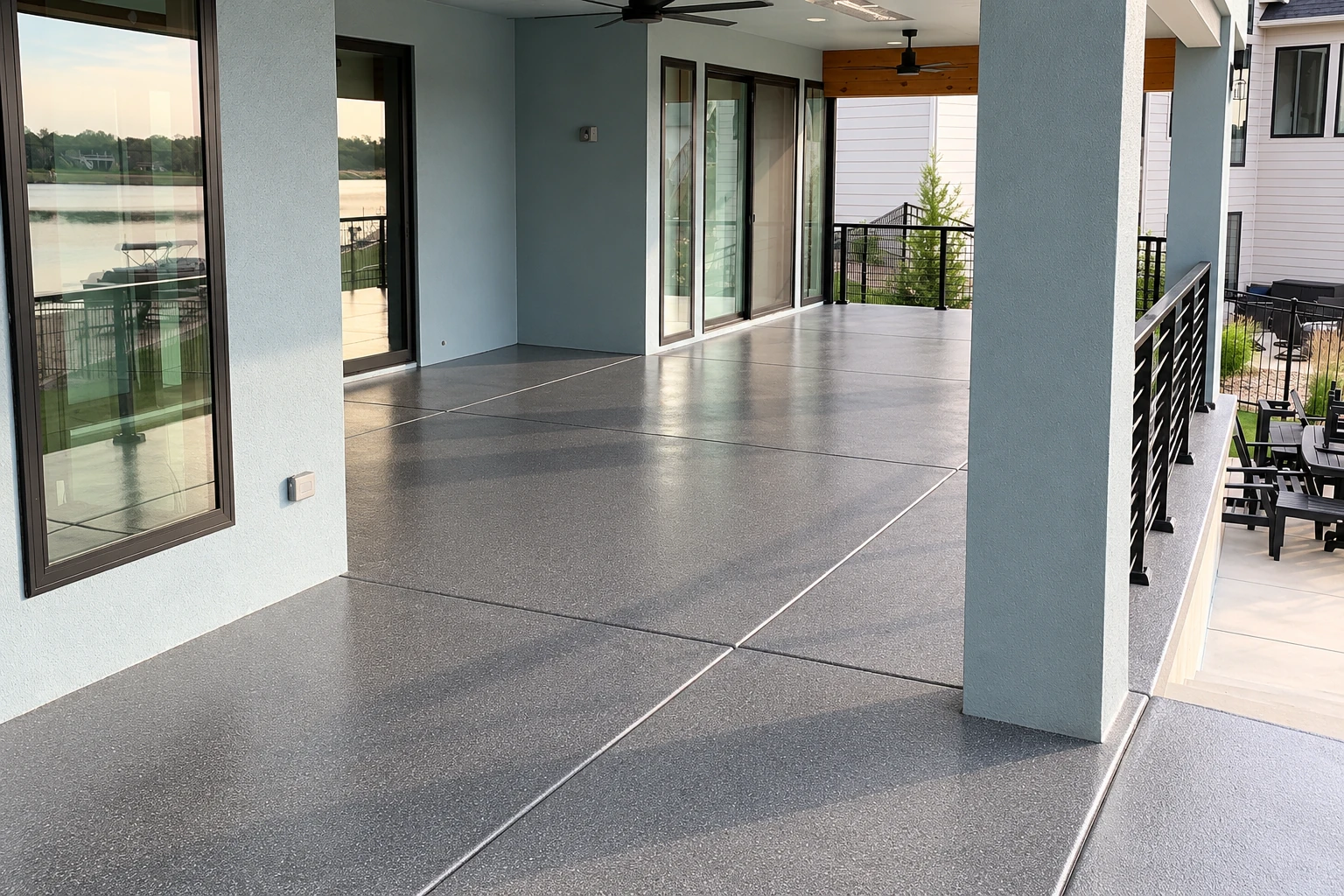
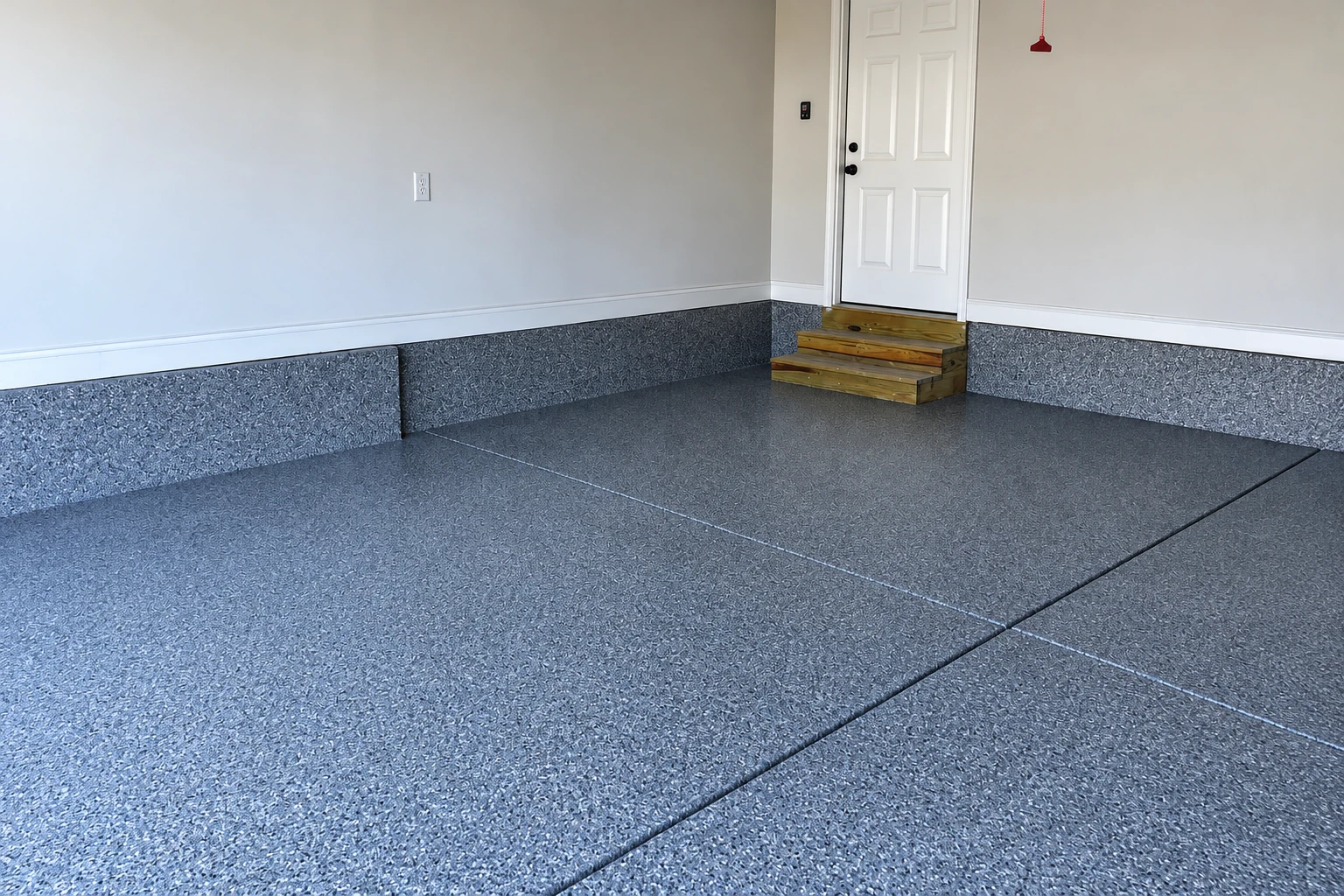
Duncanville sits right along the north side of Cedar Hill, TX, where we're based as a flooring contractor, so it's one of the first places our crew heads out to. Most of our calls there are for garages in settled neighborhoods with years of oil spots, tire marks and sometimes an old coating that's started to peel, along with shop, kitchen and warehouse floors at local businesses that need to take a beating. It's the same mix we see as far out as Mansfield, and we handle it the same way, starting with the concrete.
The city's bigger creeks, Ten Mile Creek, Horne Branch and Mauk Branch, are prone to flooding year to year. So when a garage or shop sits low near one of them, the first thing I'll ask is whether water's ever come in, because water under or across a slab is what lifts a coating, and the answer changes both the prep and the product.
What moves the price and the timing
The price mostly comes down to how big the floor is, what shape the concrete is in and which system you pick. A clean slab that only needs grinding costs less than one with deep cracks, chipped and flaking spots, or an old sealer or coating we have to strip off first, and a full flake or metallic floor takes more material and labor than a clear seal. The schedule turns on the same things, plus how long each coat needs to cure before the next one goes down and before you drive on it. I write every estimate after I've seen the slab, so your number fits your floor and not somebody else's.
Matching the coating to the room
A garage, a shop and a commercial kitchen all ask different things of a floor, so why would one product suit all three? For most garages, a ground and patched slab with an epoxy or polyaspartic system stands up to hot tires, oil and dropped tools. Kitchens and food spaces get hot water, grease and washdowns every day, and that's where urethane cement flooring usually earns its keep, because it handles heat and moisture better than a standard epoxy. If what you're picturing isn't a fit for your slab or how you use the space, I'll say so and tell you what is.
Getting your garage or shop ready
Clearing the space is the biggest help you can give us, so plan on moving cars, shelves, bikes and anything else sitting on the floor before we show up. We grind the slab edge to edge, which opens up the surface so the coating can really grab on, and anything left in place leaves a spot we can't reach. Our installers bring their own grinders and dust collection, though we'll ask about power and where to park the trailer. Have you put anything on that floor before, like a sealer, paint or a store-bought kit? Tell me at the estimate, because it has to come off first or the new coat won't stick.